


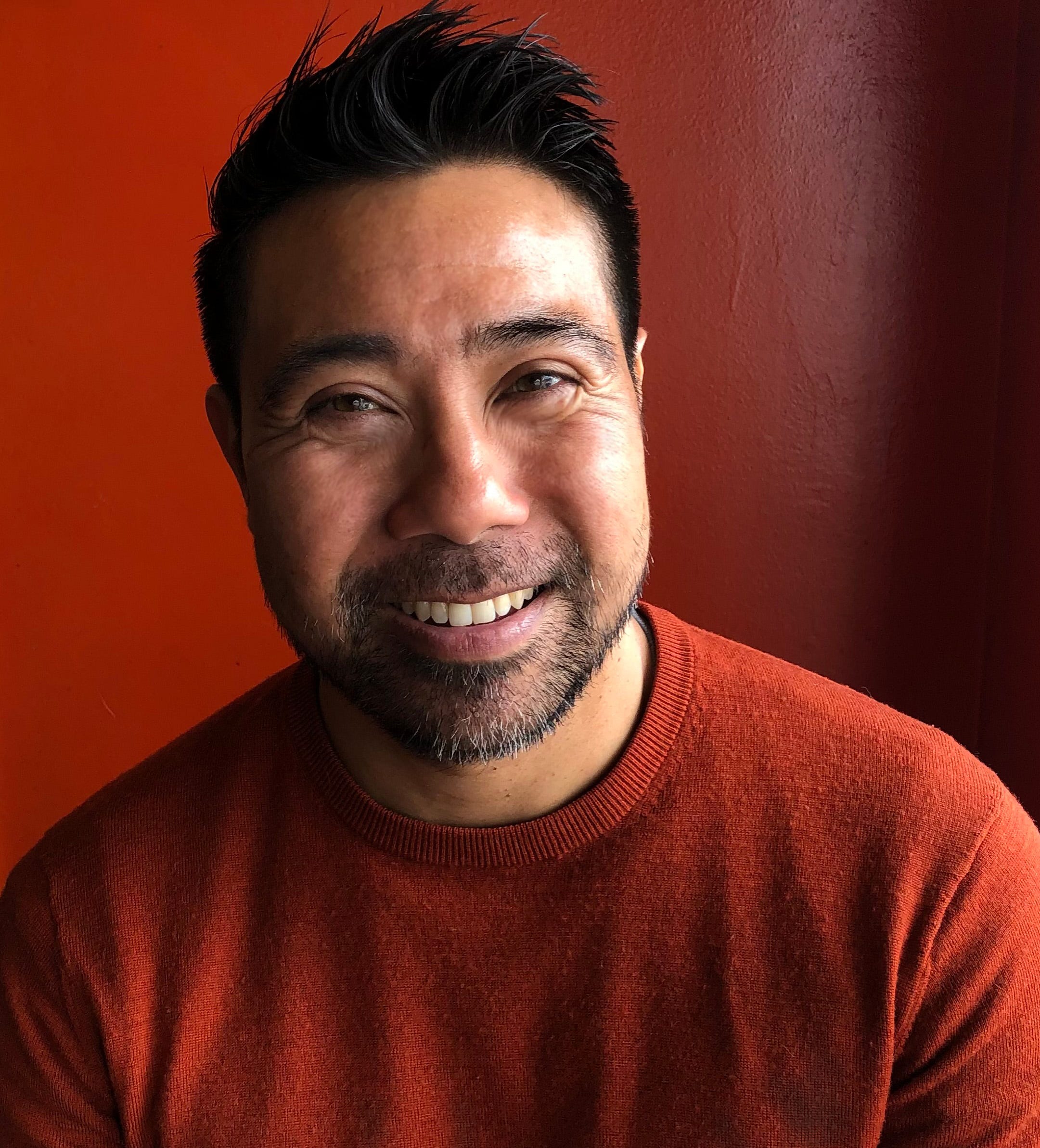
I met Davin Malasarn in 2018 when we were both enrolled in the Bennington Writing Seminars MFA program. I was there at his graduation reading, when he shared an excerpt from a novel-in-progress about a Thai-American boy named Ben who develops a mysterious health condition.
Today, that novel, The Outer Country, exists as an object in the world—one you can buy at most bookstores and that the writer Justin Torres described as “a book of demons and a book of uncommon grace; an instant classic in the queer canon.” It’s a hell of a thing to witness.
The book tells the story of a family. Far from their home in Phet Buri, Kamron and Siripon, along with Siripon’s sister Manda, are raising the American-born Ben in Los Angeles. Manda becomes something of a second mother to Ben—and, at a critical moment, makes a decision that alters the course of his life.
When Ben is still just a small child, Manda sees him dancing with a blanket tied around his waist, leading her to conclude, consistent with her religious beliefs and prejudices, that the boy must be possessed by the spirit of a dead girl. She conspires with Kamron to arrange a Buddhist exorcism to rid Ben of the spirit—and to forever keep it a secret from Siripon. One afternoon while Siripon is at work, a Buddhist monk comes to perform the ceremony. For the decade that follows, Ben suffers from anxiety-induced illness, even as he can’t quite remember what happened to him.
In a recent essay published in People magazine, Davin explains that what happens to Ben in the novel happened to him in real life: “The monk told me to lie down. He draped gauzy material over me. Then he performed a ceremony that involved chanting, sprinkling of Buddhist holy water and a paper doll that was later burned. We were in the dining room of my house, and my aunt and dad sat beside me, approving.” Davin, like Ben, wasn’t quite sure what had happened or why. But a “sense of terror” stayed with him for some time.
Much of the coverage of this novel has focused on precisely this: the fact that the exorcism—the attempted conversion therapy—really happened. But it would be wrong to think of this novel as some kind of therapeutic exercise. What becomes clear in our conversation is that, for Davin, the desire to write is the thing, which he honors with a fierce commitment to his craft. In other words, he’s worked his ass off. That he drew from his own experience to create this shining and heartbreaking novel? Well, that’s just what the great writers figure out how to do. Davin is, indeed, a great writer, and he’s just getting started.
One last thing: For those of us who try to write, it’s a blessing to have friends in the trenches with us—friends who remind us that the effort to sit in the chair and try to create something is worthwhile, all the contrary evidence in the world notwithstanding. Davin, you’re such a friend to me and to many. It’s your time, bro.
Some topics we cover:
The Outer Country as an exercise in understanding difficult people
Davin’s feelings about having a novel in the world
The relationship between art and life
Davin’s literary influences
John Updike and the Rabbit novels
Ernest Hemingway
What writing reveals and obscures
MFA programs
Writing in community
I hope you enjoy the conversation as much as I did.


